Interactive Sound Installation · Mingshan Museum
Breaking as Singing
碎以为歌 · Composing with the sound of breaking to rewrite the narrative of shattering
This work reclaims the breaking sound most bound to gendered violence — the shattering of domestic ceramics — and places its power of redefinition in the hands of those it once defined.
Origin
The work emerged from a question about object memory. In autumn 2024, while exhibiting Breaking as Fixing in East London, I encountered a recurring symbol in community narratives about gendered violence: broken domestic ceramics. That shattering sound is not accidental background — it marks the presence of two antagonistic bodies in conflict, carrying the weight of profound trauma. I discovered an emotional encoding already written into sound itself, and asked: can this sound code written into the body be rewritten?
Interactive Mechanism
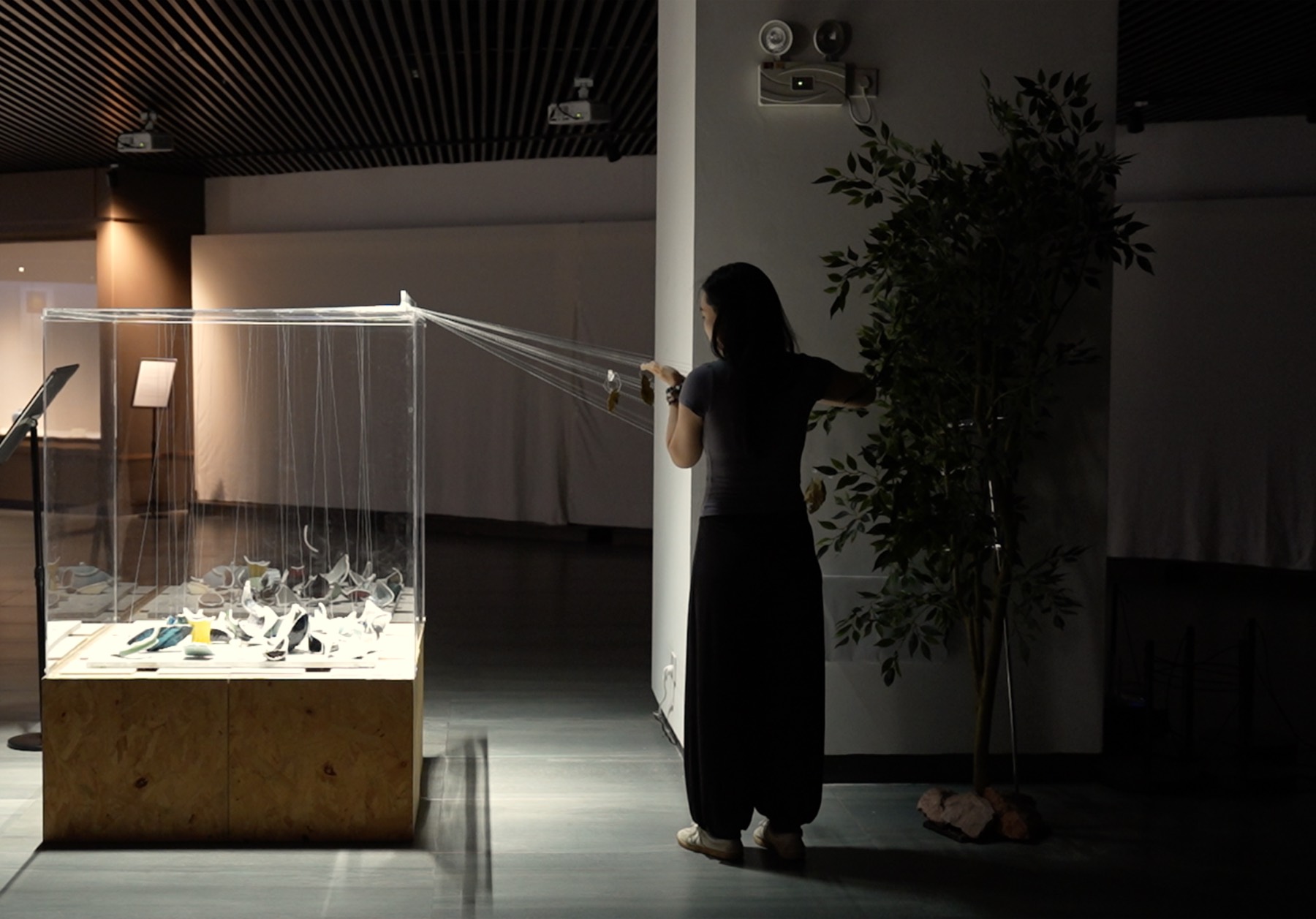
Broken pieces are lifted, then released — free-falling onto the tile floor in sequence, performing a song. Its acoustic property restores the sound of shattering in that precise moment. Sound is a sensory experience with profound emotional power; this work harnesses sound's neurobiological specificity to intervene in the sensitive subject of domestic violence. A survivor of violence becomes the subject, the performer, the rewriter of narrative — engaging Claire Bishop's theory of antagonistic participation, where true political engagement emerges not from consensus but from genuine shifts in power relations.

The Craft of Measuring the Sound
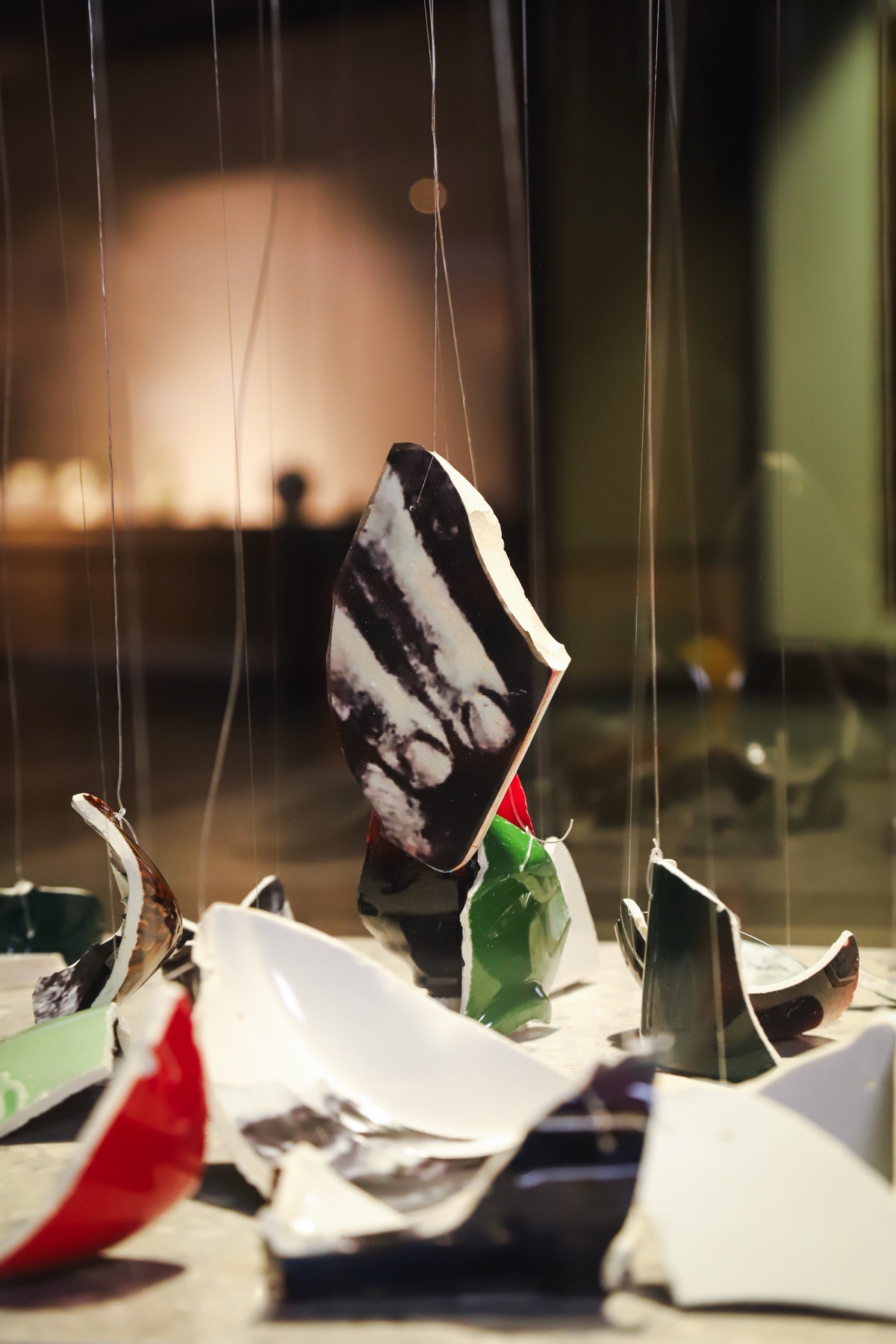
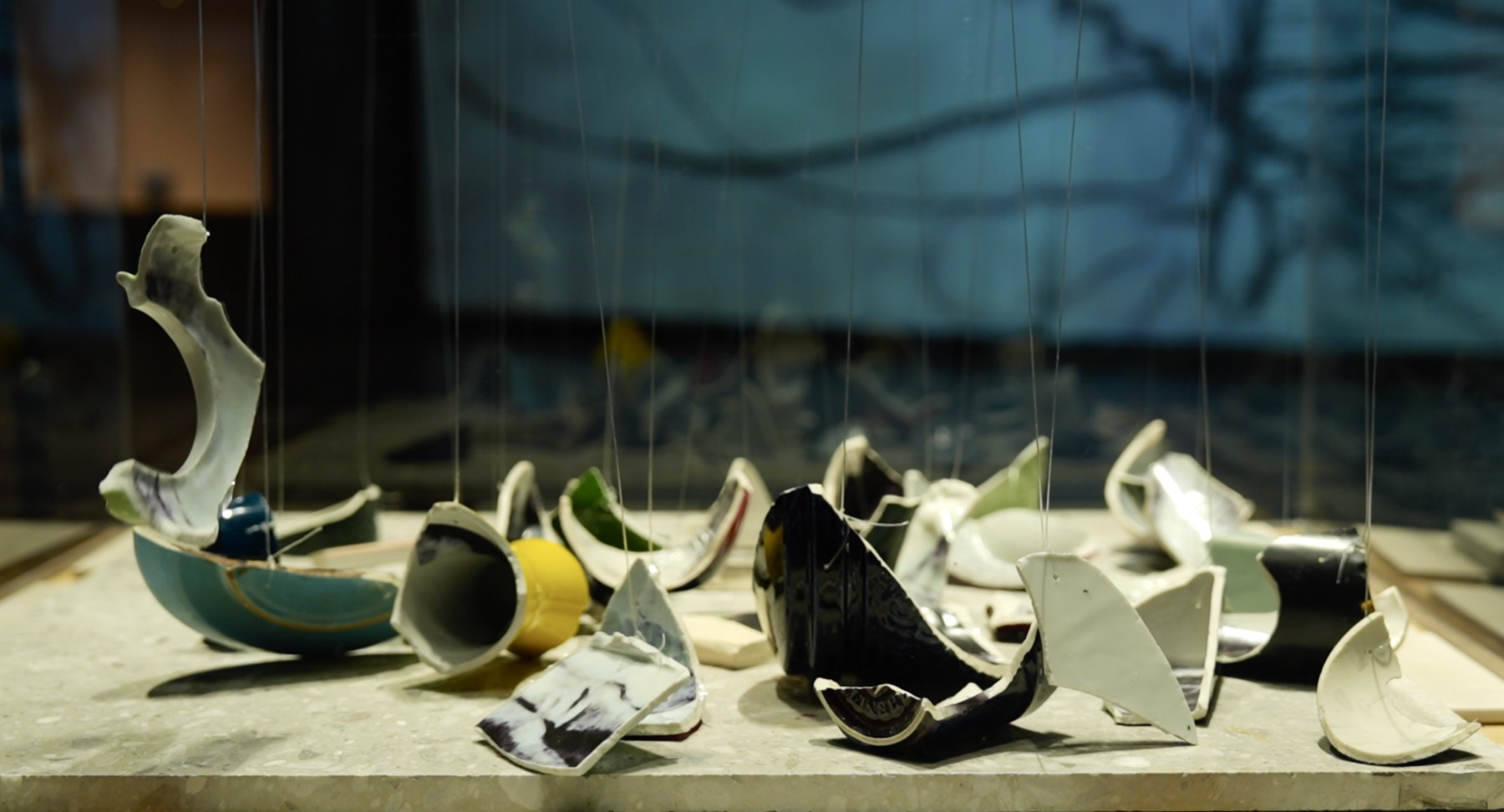
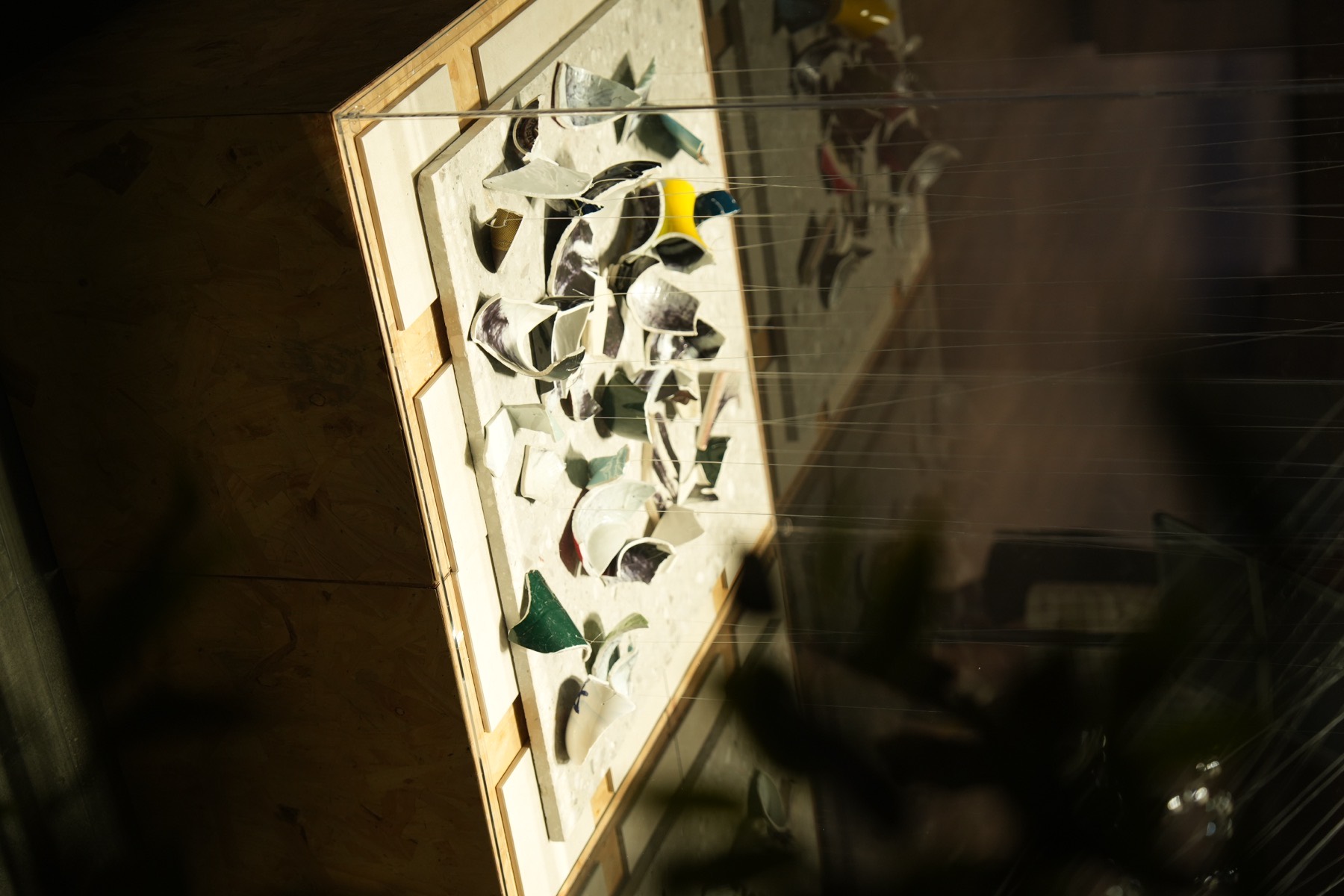
Drawing from the ancient Chinese tradition of Ji Ou (击瓯, striking ceramic bowls) that flourished in the Tang and Song dynasties, I selected ceramic shards from industrial waste to create a 35-piece sound composition. Like ancient craftsmen who controlled wall thickness and clay composition to calibrate precise tones, I chose each fragment by its material properties — thickness, porcelain quality, the curve of its shape, and the striking point — sorting the 35 specific pitches and timbres out of several hundred randomly formed shards recycled from Foshan.
The Hand
The hand carries more complex emotional tension than the face. In the moment Apollo catches Daphne, his hand touches her body and she turns into a laurel tree — a scene that became one of the most celebrated images of beauty in the Western canon. In Bernini's sculpture, gendered violence becomes the raw material of aesthetic spectacle.
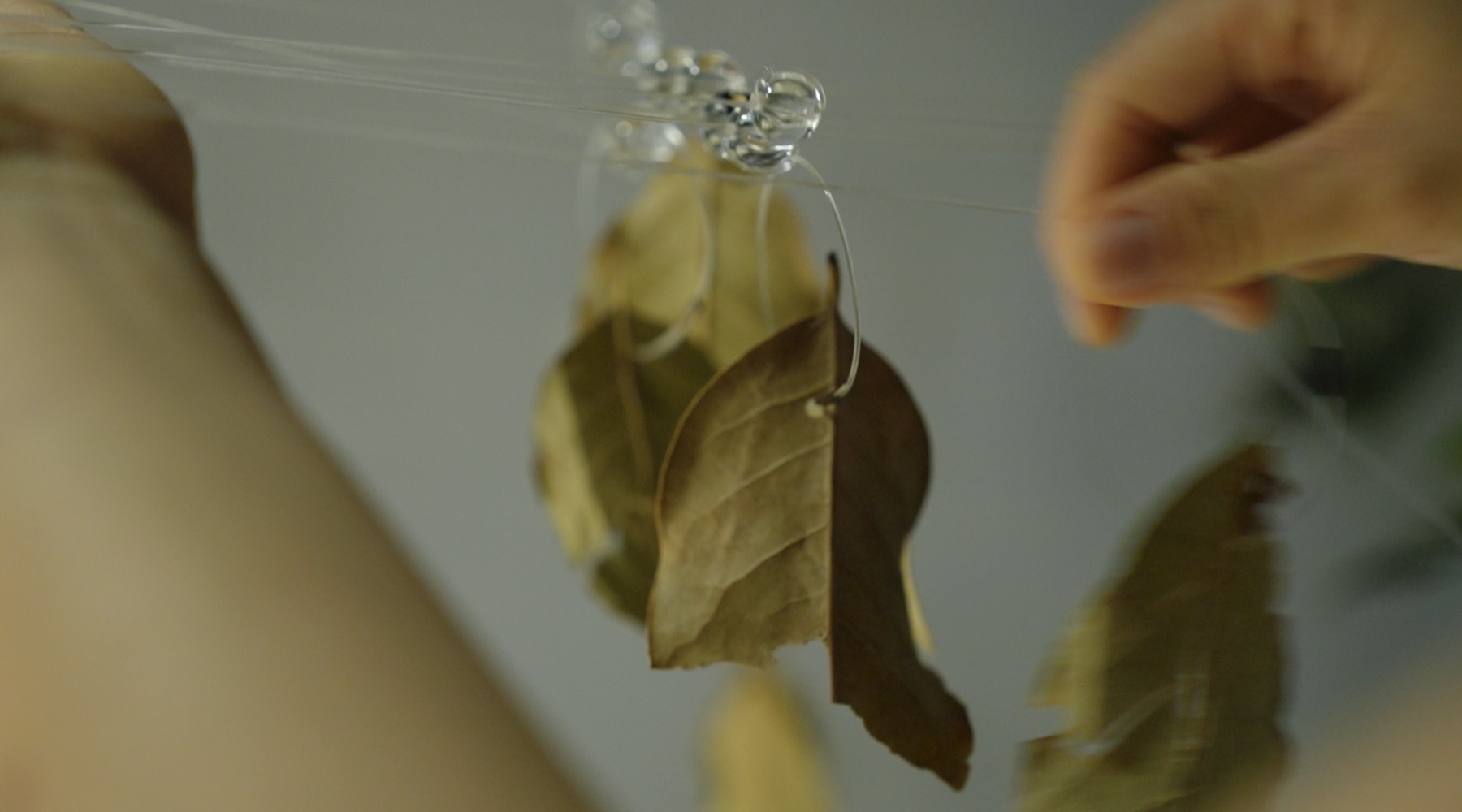
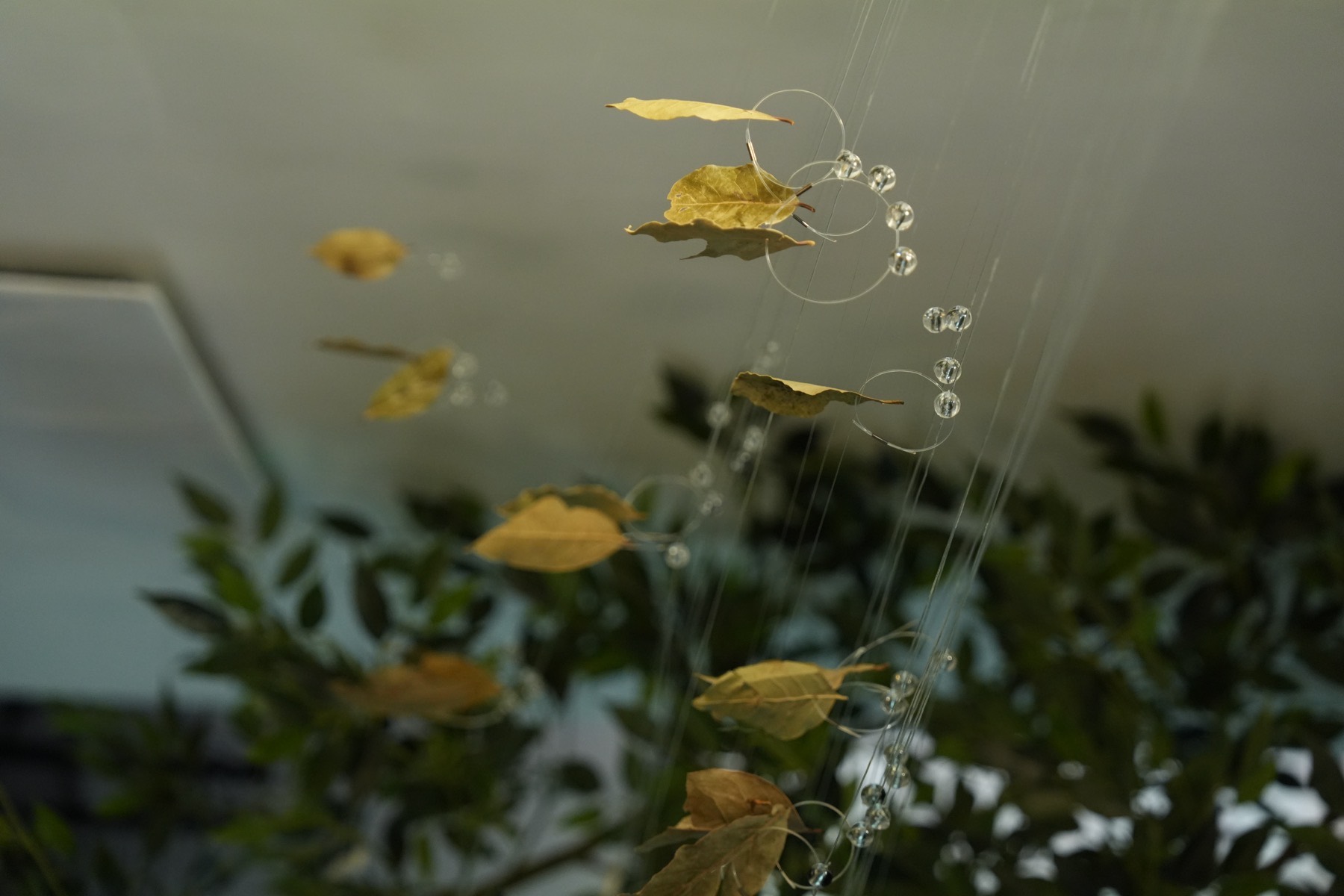
As the laurel branch pulls the fragments, raising and dropping, the image fragments bounce and reconstruct. It is Daphne's hand that plays. The object of the gaze becomes the subject who creates her own narrative — also breaking the gaze itself. What shatters, therefore, is not only the sonic code of violence, but the very gaze that aestheticizes, elevates, and inscribes such violence into art history.
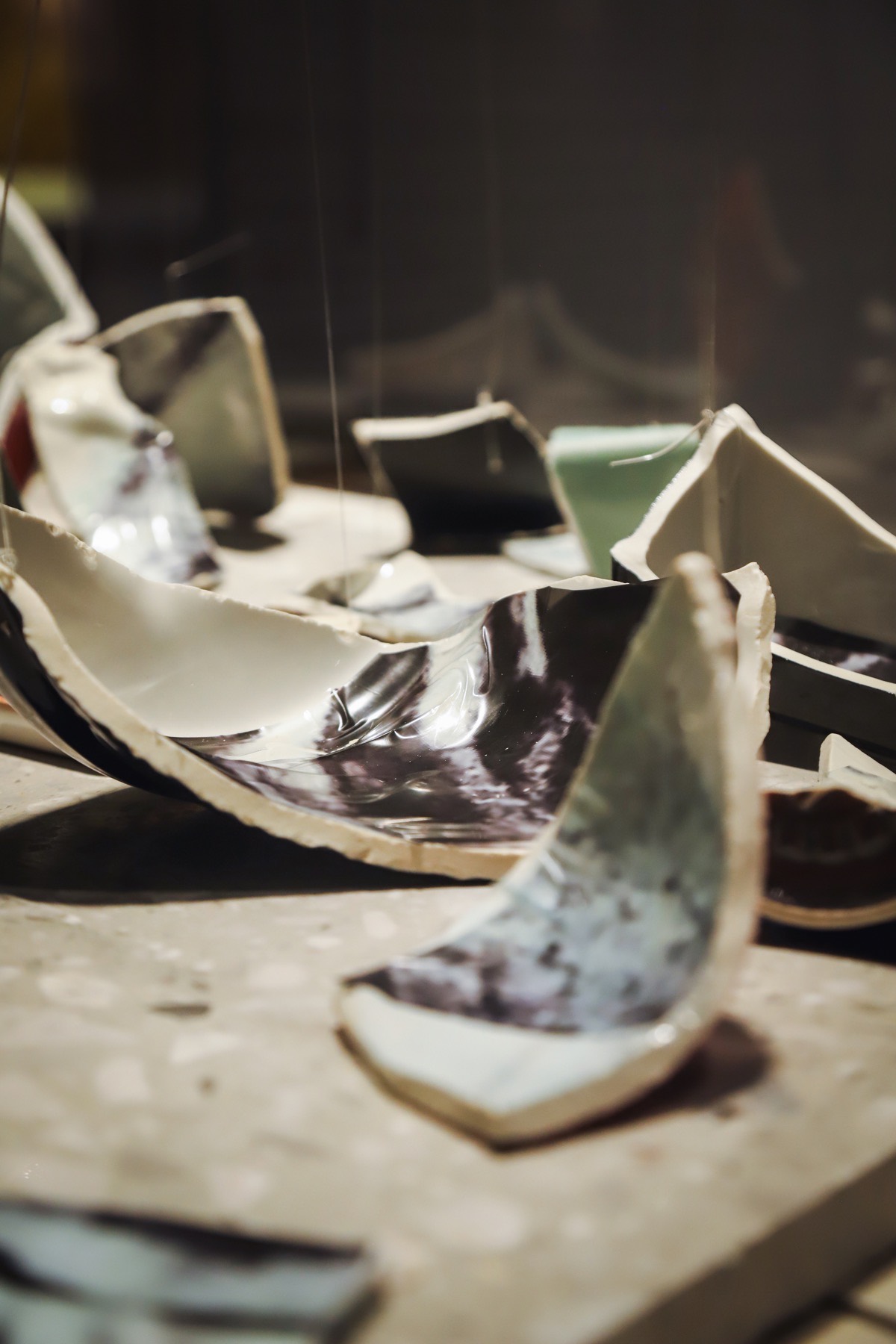
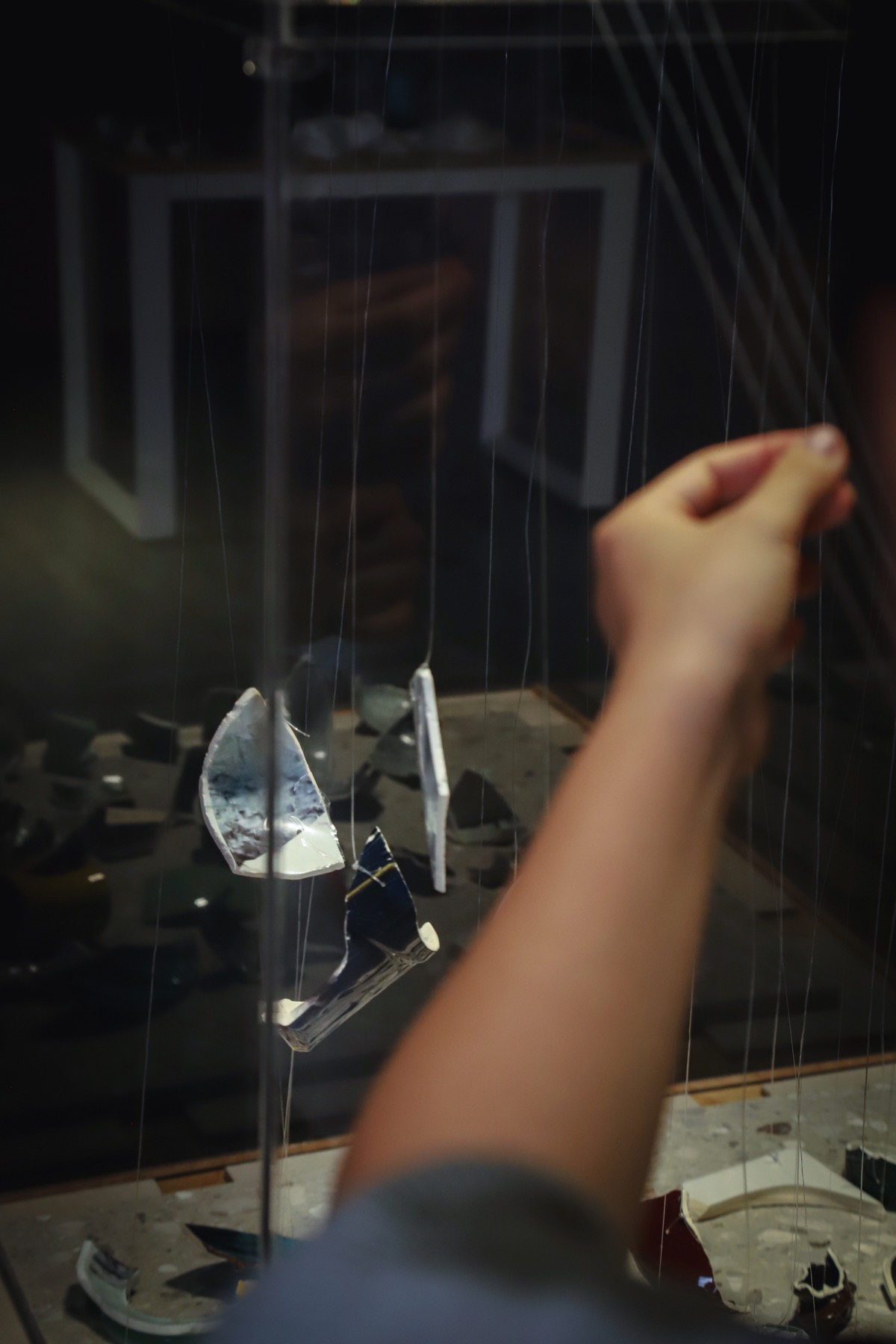
When fragments fall, each ceramic shard generates its own irreducible sound curve. Breaking releases not destruction, but individuality. The falling pieces play Für Elise — a melody I return to in moments too difficult for language — transforming the sound of breaking, creating a space where what was destroyed can sing. What remains is the fundamental right to speak oneself into being. Breaking becomes an act of creation; the violence is no longer powerful.